AFFORDABLE WILDLIFE TRAPPING & WILDLIFE CONTROL SERVICES
At Southern Wildlife Management, LLC our wildlife control services were not added later — this is where it all started. Before offering household pest control, our lead specialist built this business around ethical, humane wildlife trapping and relocation. That same specialist now holds and operates under all required pest control licenses and personally performs the pest control work as well under the dba of Southern Pest Management.
We are a family-operated company that believes wildlife control should be handled with experience, honesty, and restraint — not fear-based sales tactics. We price our services based on what is fair, not what panic allows, which is why our wildlife trapping rates remain among the most affordable in North Georgia.
We are uniquely licensed as both Wildlife Control Operators and Wildlife Rehabbers, giving us a broader understanding of animal behavior and legal handling requirements than most trappers. This allows us to evaluate situations realistically. Not every animal sighting requires trapping, and when it doesn’t, we will tell you that.
📞 Call Us:(678) 648-6397
Why Wildlife Services Are Separate From Pest Control
Wildlife control and household pest control are fundamentally different services. Trapping, relocation, and exclusion require specialized equipment, legal compliance, and animal-specific expertise that go far beyond standard pest treatment programs.
For that reason, all nuisance wildlife trapping and long-term wildlife prevention services are managed through our dedicated wildlife division at southernpest.biz, while household pest control services remain available for insect and rodent management.
This separation ensures:
- Clear expectations
- Proper licensing for each service
- Accurate pricing
- No overlap or confusion between pest programs and wildlife work
Wildlife Trapping & Control Services
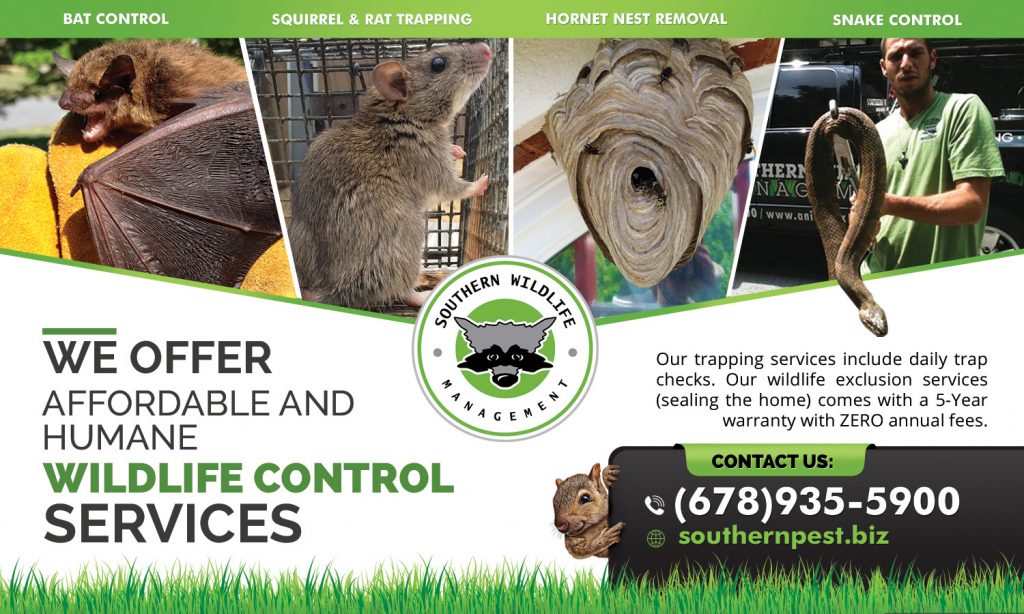
We provide licensed nuisance wildlife trapping and control for:
Bats, Beavers, Bees, Carpenter Bees, Coyotes, Dead Animal Inspection, Dead Deer, Fox, Hornets, Mice, Possums, Raccoons,Rats, Snakes, and Squirrels.
Each species has its own service page outlining behavior, legal considerations, and realistic outcomes.
If given the opportunity to resolve your wildlife issue, you will be treated honestly and fairly — every time.
📞 Call Us:(678) 648-6397
Most Commonly Asked Questions Regarding Wildlife Trapping & Wildlife Control:
What types of wildlife commonly cause problems in North Georgia?
Common nuisance wildlife in North Georgia includes squirrels, rats, mice, bats, raccoons, snakes, moles, beavers, groundhogs, and occasionally armadillos. Most issues involve homes, attics, crawl spaces, or yards.
Why is wildlife entering my home or property?
Wildlife enters structures seeking shelter, warmth, nesting areas, or food. Construction gaps, rooflines, vents, crawl spaces, and damaged siding are common entry points.
Are wildlife problems seasonal in North Georgia?
Yes. Wildlife activity increases during spring breeding seasons, summer nesting, fall shelter-seeking behavior, and winter cold snaps when animals move indoors for warmth.
Do wildlife problems mean my home is poorly maintained?
No. Even well-maintained homes can experience wildlife issues. Many animals exploit small construction gaps that are difficult to notice without a professional inspection.
What is the difference between wildlife trapping and wildlife removal?
Wildlife trapping involves capturing animals using legal, humane methods. Removal refers to safely taking the animal off the property after capture, in accordance with Georgia wildlife regulations.
Is wildlife relocation allowed in North Georgia?
Relocation laws vary by species. Some animals must be euthanized or released on-site depending on state regulations. Licensed wildlife professionals follow all legal requirements.
Why is exclusion important after wildlife removal?
Exclusion seals entry points to prevent new animals from entering. Without exclusion, wildlife problems often return even after animals are removed.
Should wildlife be trapped before sealing entry points?
Yes. Trapping must be completed before exclusion to avoid sealing animals inside walls, attics, or crawl spaces.
Can wildlife cause structural damage to a home?
Yes. Animals such as squirrels, rats, and raccoons can chew wiring, damage insulation, contaminate attics, and compromise roofing and structural components.
Are bats dangerous to have in the attic?
Bats themselves are protected and generally non-aggressive, but bat guano can create health concerns and odors. Proper bat exclusion must follow seasonal and legal guidelines.
Do snakes indicate another wildlife problem?
Often, yes. Snakes are attracted to food sources such as rodents, frogs, or insects. Snake sightings usually indicate prey activity on the property.
Why do moles and groundhogs damage yards?
Moles tunnel while hunting insects underground, while groundhogs dig burrows for shelter. Both can cause lawn damage and undermine structures.
Are wildlife problems a health risk?
Wildlife can carry parasites, bacteria, and diseases. Droppings, urine, and nesting materials can create indoor air quality and sanitation issues.
Can wildlife control be done humanely?
Yes. Professional wildlife control uses humane, species-specific methods that comply with state laws and prioritize safety for people, pets, and the animals involved.
What is the most effective long-term solution for wildlife control?
The most effective approach combines trapping or removal, exclusion work, habitat modification, and ongoing monitoring to prevent future wildlife intrusions.